Acupuncture in Thatcham and Newbury
I am a licensed Acupuncturist trained in Traditional Chinese Medicine and Five Element Acupuncture. I have a particular interest in treating patients for mental health issues (such as stress, anxiety and depression) and hearing issues (such as Eustachian Tube Dysfunction, Tinnitus, Vertigo, Dizziness, mild earache or blocked ears). Please see the ear wax removal page as ear wax build-up could be a simple solution to hearing issues!
Acupuncture originates from China and the Far East and is one of the world’s oldest therapies based on over 2000 years of knowledge. The body’s vital energy known as Qi should pulsate harmoniously through a network of energy pathways known as meridians or channels. For numerous reasons, the Qi can become blocked, disrupted or depleted so acupuncture can be used by inserting very fine needles at carefully chosen points to affect the flow of Qi around the body. The aim is to stimulate the Qi and blood flow to ultimately restore balance and harmony to the body. I use two types of acupuncture styles; 5-Element and Traditional Chinese Medicine to offer a holistic approach to treat the body as a whole, as well as the mind and spirit.

Western science understanding of acupuncture
In the Western world, Acupuncture is mostly considered to be useful for analgesia (pain killer) and to reduce inflammation but this is only part of the story. For those that struggle with the concept of Qi and Chinese Medicine, the mechanisms of Acupuncture can be described in Western terms. The mechanisms involve specialised nerve fibres in sensory nerve pathways, naturally occurring biochemicals such opioid and non-opioid neuropeptides and neurotransmitters that have anti-inflammatory and analgesic effects when stimulated with acupuncture.
Along with other biochemical and signalling pathways, one of the mechanisms of Acupuncture can be explained by the use of Purinergic signalling. Acupuncture initiates Purinergic signalling, a type of extracellular communication that uses Adenosine (a substance that is a purine which occurs naturally in the body) that binds to receptors. Adenosine in the form of ATP can be thought of as an energy carrying molecule. ATP occurs in all tissues and organs and is used in nerve transmission. The body uses purine levels to signal if tissues or functions are healthy or are damaged. Acupuncture stimulates Adenosine to binds to receptors which can bring about pain relief.
As well as pain relief and anti-inflammatory effects, Acupuncture causes muscles to relax (via the central nervous system), reduces stress (by reducing activity in the structures in the limbic system), regulates hormones (by regulating the hypothalamus-pituitary-adrenal axis) and modulates the healing of tissues and digestion (by affecting the parasympathetic nervous system).
Auricular acupuncture
Did you know organs, tissues and channels can be mapped to the outer ear (auricle)? This provides access to the organs, tissues and channels by stimulation with needles, ear seeds or electricity to restore balance to the body and stimulate the body’s healing process. For those who dislike needles, auricular stimulation with ear seeds is a great alternative to acupuncture!

ADDITIONAL TREATMENTS
Electroacupuncture
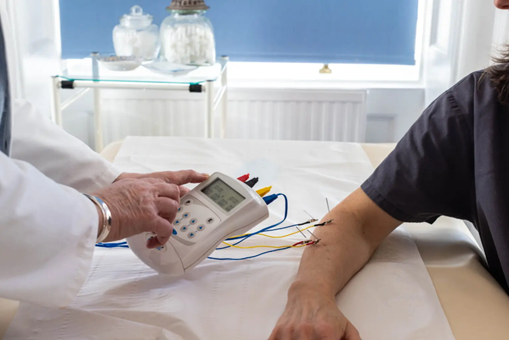
Electroacupuncture is most commonly used for musculoskeletal issues and it
applies a mild electrical current to acupuncture needles. It is used for
pain management, to stimulate nerves, muscles, blood circulation and reduce
inflammation to promote the body’s healing processes.
Tuina
Tuina is a form of Chinese Medical massage which works to facilitate your
body’s capacity to heal itself. It stimulates Qi and Blood flow to nourish
areas that are deficient and enables the energy to move in the meridians
(similar to acupuncture) and muscles. This form of massage is typically
incorporated into acupuncture treatments.
Cupping
Glass or plastic cups are placed on the skin to form a vacuum, this induces
blood to be drawn into the area to nourish a deficiency or move fluids away
from an area to clear stagnant Qi. Although this is an old Eastern technique
dating back around 3000 years ago, it has recently become popular in the West
with athletes and sports celebrities.
Gua Sha
This technique dates back around 3000 years and involves a Gua Sha tool (round
edged tool) to be placed on the skin and pressure applied. Gua means to scrape
and Sha means the red spots or skin changes that occur when the tool is scraped
over the skin (this represents the movement of Qi and Blood and is the body
throwing out old blood or a Pathogenic Factor being released). It works by
stimulating the meridians, it moves Qi and Blood and is useful to treat a
general area.
Moxibustion
Moxa is prepared from the artemesia vulgaris latiflora leaves (similar to
mugwort), the veins of the leaves are stripped, ground down and then aired.
Moxa is lit near or on the body on acupuncture points or meridians. This acts
to penetrate and warm the area for cold conditions or nourish the Qi and Blood
locally.